K-Style Gutter Installations Designed for Florida Homes and Coastal Weather
K-style gutters installations give homeowners a practical way to move rainwater away from the roof, siding, foundation, and outdoor areas. Their flat-backed shape fits neatly along the fascia and provides good water capacity during periods of heavy rain. For properties in Southwest Florida, a properly planned gutter system can help manage frequent downpours and reduce water-related wear around the home. At Allstate Construction Roofing, we install gutter systems with careful attention to roof drainage, placement, and long-term performance.
Why Proper K-Style Gutter Installation Matters for Your Property
A gutter system has an important job every time rain reaches your roof. Water flows down the roof surface quickly, and without properly sized and positioned gutters, it may spill near exterior walls, doors, landscaping, walkways, and the foundation. K-style gutters are a common choice because their shape can carry a useful amount of water without looking bulky along the roofline.
Professional installation starts with reviewing the roof edges, fascia condition, roof pitch, drainage paths, and suitable downspout locations. These details help determine where water should enter the gutter and where it should safely discharge. Correct slope is also important. A gutter that sits too level may hold standing water, and excessive slope can affect appearance and water flow.
Homes in Southwest Florida often face strong rainfall during summer storms and tropical weather. Gutters need secure fastening and dependable connections to handle these conditions. Downspouts also need enough capacity to move collected water away without frequent overflow.
K-style gutters can work with many residential roof designs and exterior styles. When installed correctly, they create a clean edge along the home and support controlled roof drainage. Routine cleaning and occasional inspections can help keep the system working properly through changing weather conditions and years of regular use.
Choosing the Right K-Style Gutters for Your Home
Choosing gutters involves more than matching a color to the exterior. Gutter size, material, roof area, rainfall, downspout placement, and fascia condition can affect how well the finished system manages water. Aluminum is commonly used for K-style gutters because it is lightweight, resists rust, and works well for many residential applications. Other material options may be appropriate based on the property and project requirements.
Seamless K-style gutters are formed in long sections, which limits the number of joints along each gutter run. Fewer joints can mean fewer areas where leaks may develop as the system ages. Corners, end caps, outlets, and downspout connections still need careful sealing and installation to help prevent unwanted water escape.
At Allstate Construction Roofing, our approach includes evaluating the roofline before installation so gutter placement works with the existing roofing system. Fasteners need secure attachment, and downspouts should direct runoff toward suitable drainage areas rather than allowing water to collect beside the structure.
Homeowners can also help protect gutter performance with basic maintenance. Leaves, roof debris, and small branches may restrict water movement and place added weight on the system. Periodic checks are especially useful after storms or high winds in Florida. A clean, securely attached gutter system is better prepared to handle heavy seasonal rainfall and protect surrounding areas.
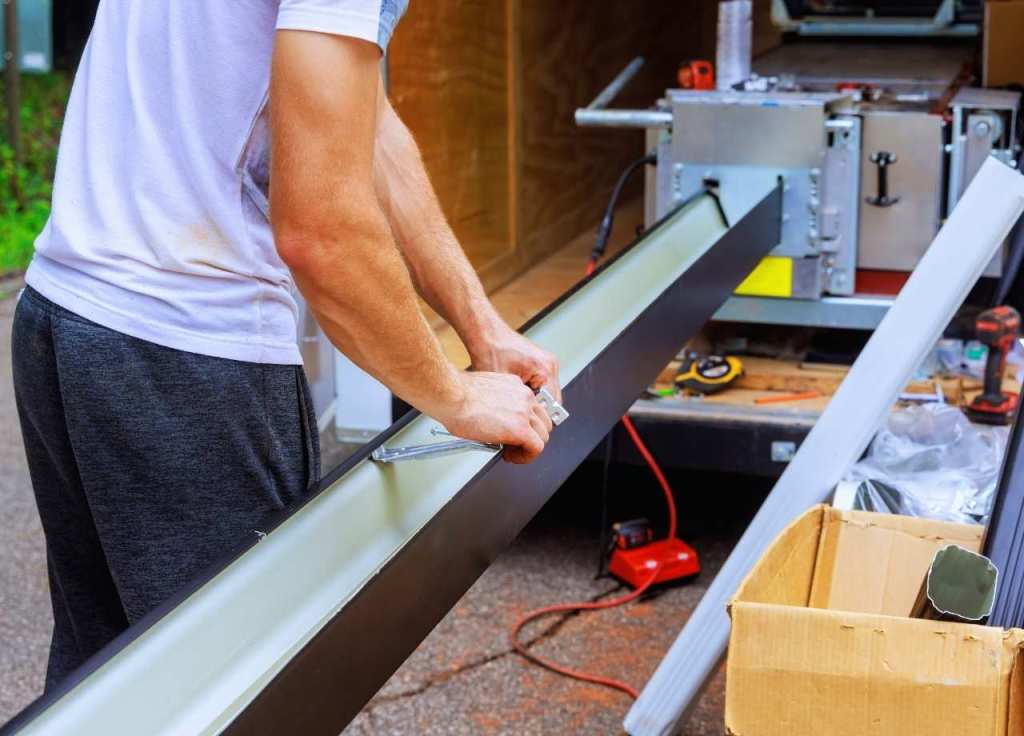
Key points to consider include:
- Proper gutter sizing for the roof area
- Secure attachment along the fascia
- Correct slope toward downspout outlets
- Downspout placement that supports effective drainage
- Durable materials suited to humid and coastal conditions
- Regular cleaning to reduce clogs and standing water
What to Expect During a K-Style Gutter Installation
A professional installation begins with an assessment of the roof perimeter and the areas where rainwater needs to be directed. Measurements are taken along the fascia to determine gutter lengths, corners, outlet locations, and downspout positions. The condition of the fascia should also be checked since damaged or weakened wood may need attention before new gutters are secured.
The gutters are then prepared to match the required dimensions of the home. Proper pitch is established so rainwater naturally travels toward the outlets instead of remaining inside the gutter channel. Hangers and fasteners are positioned to provide steady support across each run. Careful spacing matters because gutters can carry considerable weight during heavy rainfall.
Downspouts are connected at planned drainage points and directed away from areas where runoff could cause problems. Extensions or other drainage measures may be recommended when water needs to travel farther from the structure. Corners and connections are sealed to help reduce leaks.
After installation, the system should be checked for secure attachment, correct alignment, and open drainage paths. Homeowners should also watch gutter performance during rainfall. Overflow, sagging sections, dripping joints, or water collecting near the home can indicate that maintenance or an adjustment is needed. Timely attention can help protect the roof edge, exterior surfaces, landscaping, and areas surrounding the foundation.
Frequently Asked Questions
Gutter sizing depends on roof area, roof pitch, drainage layout, and expected rainfall. Larger or steeper roofs may move water faster and require greater gutter or downspout capacity. A roof and gutter assessment can help determine a suitable size for the property.
Cleaning needs depend on nearby trees, roof debris, and seasonal weather. Checking gutters several times during the year and after major storms can help prevent clogs. Water spilling over the edge or draining slowly can be a sign that cleaning is needed.
Yes. K-style gutters can often be installed without replacing an existing roof, provided the fascia and roof edges are in suitable condition. Before starting the installation, we check these areas so issues that may affect secure attachment can be identified and addressed.