Flat commercial roofs are a popular choice for office buildings, retail centers, warehouses, medical facilities, and industrial properties throughout Southwest Florida. They offer practical use of space, cost-effective installation, and easier access for maintenance. At the same time, Florida’s intense sun, heavy rain, humidity, and hurricane-season storms place constant stress on commercial roofing systems.
Property owners often focus on repairs when leaks or damage appear, which is a smart approach in many situations. Our team at Allstate Construction Roofing performs commercial roof inspections and repairs for businesses across Southwest Florida, and we frequently help owners extend the life of their existing roofing systems through timely maintenance. There comes a point, however, when repairs no longer provide the best value.
Knowing when to move from repair to replacement can prevent ongoing water intrusion, rising maintenance costs, and disruptions to business operations. Understanding the warning signs can help building owners make informed decisions before a roofing problem becomes a much larger issue.
The Age of the Roofing System Matters
Every commercial roofing system has a lifespan. The exact timeline depends on the roofing material, installation quality, maintenance history, and exposure to weather conditions. Flat roofs in Southwest Florida often experience accelerated wear due to year-round UV exposure, frequent storms, and high moisture levels.
Many commercial flat roofing systems can last between 15 and 30 years when properly maintained. As a roof approaches the upper end of its expected service life, problems tend to appear more frequently. Small leaks become recurring issues, flashing components begin to deteriorate, and membrane performance gradually declines.
Age alone does not automatically mean replacement is necessary. A professional inspection can determine the current condition of the roof. Still, if your roof is nearing the end of its expected lifespan and requiring repeated repairs, replacement may be the more cost-effective long-term solution.
Recurring Leaks Are Becoming a Pattern
One isolated leak does not necessarily indicate that a roof has failed. Commercial roofs can develop localized issues that can be repaired successfully. The concern grows when leaks continue to appear in multiple locations or return shortly after repairs have been completed.
Repeated water intrusion often signals that the roofing system is experiencing widespread deterioration. Seams may be separating, flashing may be failing, or the membrane itself may be losing its ability to keep water out.
In Southwest Florida, heavy seasonal rainfall can expose weaknesses quickly. A roof that struggles to remain watertight during routine rain events is unlikely to provide reliable protection during tropical storms or hurricanes. When leaks become a recurring maintenance issue, replacement should be seriously considered.
Visible Membrane Deterioration
The roof membrane serves as the primary waterproof barrier on a flat commercial roof. Over time, exposure to sunlight, heat, standing water, and weather can cause the membrane to break down.
Building owners and facility managers may notice cracking, blistering, splitting, shrinking, or surface erosion. These conditions often indicate that the roofing material is nearing the end of its useful life.
Small isolated areas of damage can sometimes be repaired. When membrane deterioration is widespread across large sections of the roof, repairs become increasingly difficult and less effective. A replacement project can restore full protection and reduce the risk of future failures.
Cracks and Surface Splitting
Continuous expansion and contraction caused by Florida’s heat can place stress on roofing materials. Over time, this movement may create cracks or splits that allow water to penetrate the system.
Once these openings become widespread, patching individual sections often turns into an ongoing cycle of repairs. Replacing the roofing system addresses the root problem instead of treating symptoms.

Blistering and Bubbling
Blisters form when moisture or trapped air becomes sealed beneath the membrane surface. While a few isolated blisters may not create immediate problems, large numbers of blisters can weaken the roofing system and increase the likelihood of leaks.
A roof covered with significant blistering often indicates broader issues within the roofing assembly that may justify replacement.
Ponding Water Remains Long After Rainfall
Flat roofs are designed with drainage systems that direct water toward drains, scuppers, or gutters. Water should not remain on the roof surface for extended periods after a storm.
Ponding water occurs when standing water remains for more than 48 hours following rainfall. This condition places additional weight on the roof and accelerates material deterioration.
Southwest Florida’s rainy season can make ponding water especially problematic. Repeated exposure to standing water can weaken seams, damage membranes, and contribute to structural concerns over time.
Minor drainage issues can sometimes be corrected through repairs or modifications. If ponding water is widespread or tied to aging roof components, replacement may provide the best solution.
Repair Costs Continue to Increase
One of the clearest signs that replacement should be considered is the growing cost of maintaining an aging roof.
Commercial property owners often take a reasonable approach by investing in repairs when problems arise. The challenge occurs when repairs become more frequent and more expensive each year. Eventually, the cumulative cost of ongoing maintenance may exceed the value gained from keeping the existing roof in service.
When evaluating repair history, it is helpful to review maintenance records over the previous several years. If roofing expenditures are steadily increasing while performance continues to decline, replacement may offer stronger financial value.
A new roofing system can reduce emergency repair costs, improve reliability, and provide greater predictability for budgeting purposes.
Energy Bills Are Rising Without Explanation
Commercial roofs play a significant role in a building’s energy efficiency. As roofing materials age, their ability to reflect heat and provide insulation may diminish.
Southwest Florida businesses face substantial cooling demands throughout much of the year. An aging roof that absorbs excess heat can increase strain on HVAC systems and contribute to higher utility costs.
Property owners sometimes notice increasing energy bills even though building occupancy and operations remain relatively unchanged. When this occurs alongside visible roof deterioration, the roofing system may be contributing to the problem.
Modern commercial roofing materials often offer improved energy performance compared to older systems. Replacing an outdated roof can help improve indoor comfort while reducing cooling costs.
Storm Damage Has Compromised the Roofing System
Southwest Florida experiences some of the most challenging weather conditions in the country. High winds, tropical storms, hurricanes, hail, and wind-driven rain can all affect commercial roofing systems.
After a major storm event, a professional roof inspection is essential. Damage is not always obvious from ground level, and some issues may remain hidden until leaks develop weeks or months later.
Signs of storm-related roof damage can include punctures, membrane separation, displaced flashing, lifted sections of roofing material, and water intrusion. In some cases, the damage may be isolated and repairable.
When a roof already has significant age and storm damage affects multiple areas, replacement often becomes the more practical choice. Installing a new roofing system may provide stronger performance during future storm seasons and reduce the likelihood of ongoing problems.
Moisture Is Present Within the Roofing System
Not all roofing damage is visible from the surface. Moisture can become trapped beneath the membrane and spread through insulation layers over time.
Professional roofing inspections often identify hidden moisture through specialized testing methods. When moisture becomes widespread within the roofing assembly, repairs may not adequately address the extent of the damage.
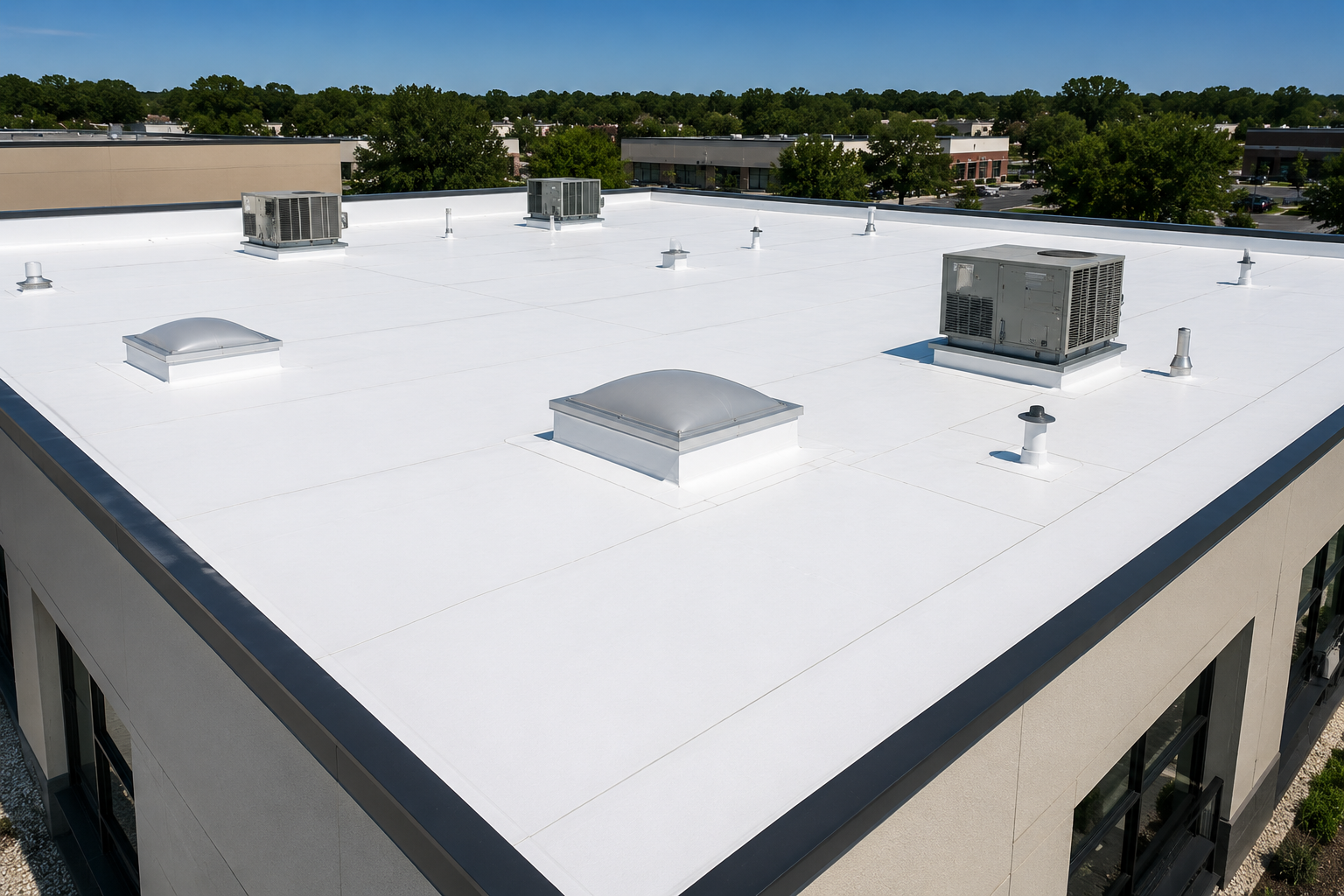
Wet insulation loses much of its effectiveness and can contribute to energy loss, mold concerns, and continued deterioration. In these situations, replacement frequently becomes necessary to restore the roof’s performance.
Interior Warning Signs
Building occupants may notice warning signs before roof problems become visible outside. Water stains on ceilings, peeling paint, mold growth, and unexplained odors can all indicate moisture intrusion.
These symptoms should never be ignored. Early investigation can help determine whether repairs are sufficient or if the roofing system has reached the point where replacement is warranted.
The Roof No Longer Meets Current Business Needs
Commercial buildings evolve over time. HVAC systems are upgraded, solar equipment may be added, and occupancy requirements can change. An older roof that was installed decades ago may not be well suited for current operational demands.
A replacement project provides an opportunity to evaluate drainage performance, energy efficiency, insulation levels, and roofing materials. Property owners can select a system designed to support both present needs and future plans.
This approach often delivers value beyond simply addressing existing roofing problems. It can improve building performance and support long-term property management goals.
Why Professional Evaluations Are Important
Determining whether a commercial roof should be repaired or replaced requires more than a visual assessment from the ground. Many roofing issues are hidden beneath the surface and require trained evaluation.
A professional commercial roofing inspection provides a clear understanding of the roof’s current condition, remaining service life, and potential risks. The inspection process can identify structural concerns, moisture intrusion, drainage issues, membrane deterioration, and storm-related damage.
For business owners, this information supports better planning and helps avoid unexpected roofing emergencies. Rather than reacting to leaks as they occur, property managers can make proactive decisions based on the actual condition of the roofing system.
Protecting Your Commercial Property for the Long Term
Flat commercial roofs are designed to provide years of dependable protection, but no roofing system lasts forever. Age, weather exposure, moisture, and ongoing wear gradually affect performance. Recognizing the signs of deterioration early can help prevent costly damage to building interiors, equipment, inventory, and daily operations.
Recurring leaks, visible membrane damage, ponding water, rising repair expenses, storm-related issues, and hidden moisture are all indicators that a roof may be approaching the end of its service life. When several of these conditions are present at the same time, replacement often becomes the most practical investment.
For commercial property owners in Southwest Florida, routine inspections and timely evaluations remain the best way to determine the right course of action. Understanding the condition of your roof today can help protect your business from larger expenses and unexpected disruptions tomorrow.